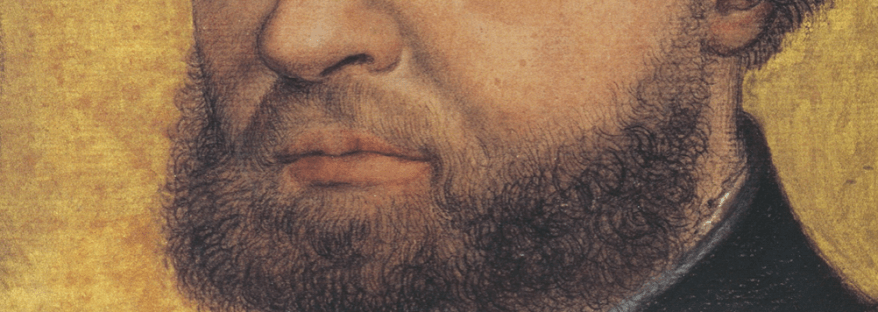
Hilary Mantel emphasized that novels should raise questions rather than provide answers, illustrated through her portrayal of Thomas Cromwell and Holbein's art. Cromwell’s rise amid Tudor court politics is detailed alongside Holbein’s contributions, reinforcing both the artistry and historical significance of their relationship, while reflecting the intricate dynamics of power and identity during that era.
Category: Symbols and emblems
Hans Holbein the Younger and Thomas Cromwell as depicted in Hilary Mantel’s Wolf Hall trilogy
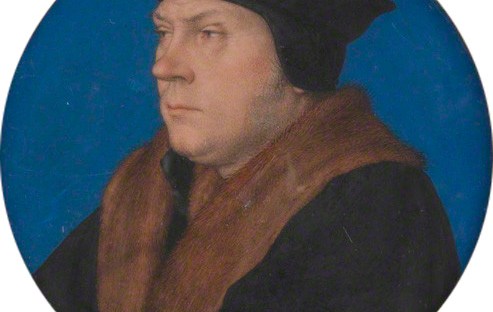
The content discusses the significance of historical fiction, particularly the works of Hilary Mantel, in portraying the Henrician court through researched narratives. It emphasizes Hans Holbein's portraits as vital historical sources, revealing connections between subjects like Sir Thomas Cromwell and prominent figures, thereby influencing modern interpretations of Tudor history.
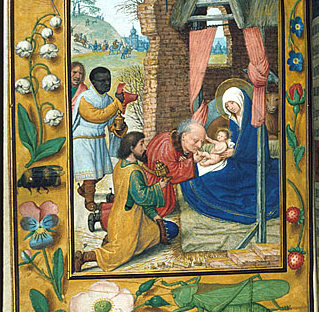
The Adoration of the Kings
This post is a day late, but here are two beautiful full page miniatures by Simon Bening of his interpreation of the Adoration of the Kings on the Feast of the Epiphany. The first is from the da Costa Hours (MS M 399) now in the Morgan Library, New York. Adoration of the Kings. (folio… Continue reading The Adoration of the Kings
And there were shepherds in the fields …
f157verso Ms M399 the da Costa Hours (c1515); Simon Bening (1483/4 - 1561). The Morgan Library, New York. Simon Bening has chosen to depict the moment the single angel visits the shepherds as told by St Luke and St Matthew in the New Testament and has set the announcement to these humble men in a… Continue reading And there were shepherds in the fields …
The Nativity – By Simon Bening c 1515.
Hidden away in the Morgan Library in New York is this gem of a book of hours painted by the last of the male Flemish illuminators, the great Simon Bening. Folio 151verso is a full page illumination of the birth of the Christ Child. The Virgin kneels before naked newborn Christ, who is laid on… Continue reading The Nativity – By Simon Bening c 1515.