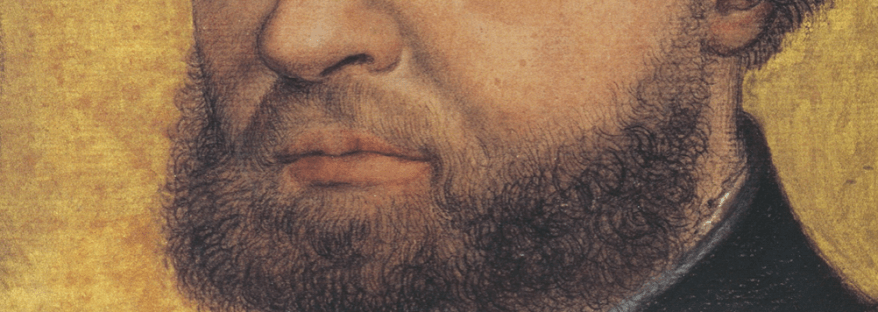
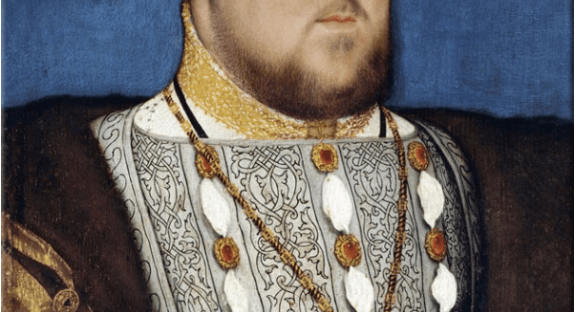
Hilary Mantel emphasized that novels should raise questions rather than provide answers, illustrated through her portrayal of Thomas Cromwell and Holbein's art. Cromwell’s rise amid Tudor court politics is detailed alongside Holbein’s contributions, reinforcing both the artistry and historical significance of their relationship, while reflecting the intricate dynamics of power and identity during that era.
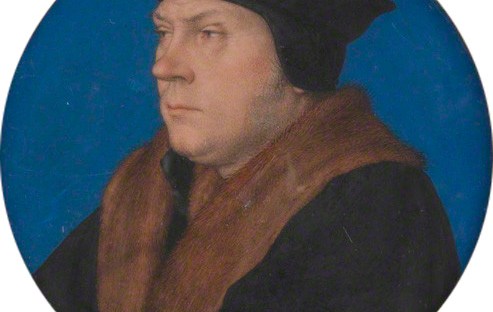
Category: portrait miniature
Hans Holbein the Younger and Thomas Cromwell as depicted in Hilary Mantel’s Wolf Hall trilogy
The content discusses the significance of historical fiction, particularly the works of Hilary Mantel, in portraying the Henrician court through researched narratives. It emphasizes Hans Holbein's portraits as vital historical sources, revealing connections between subjects like Sir Thomas Cromwell and prominent figures, thereby influencing modern interpretations of Tudor history.
Levina Teerlinc (?) Henry VIII’s court artist from 1546 – 1576
The author recounts their discovery of Levina Teerlinc, a significant 16th-century woman artist, while researching for their MA. They analyze a portrait by Nicholas Hilliard, suggesting it depicts Teerlinc as the Unknown Lady. Teerlinc's status as Elizabeth I's official painter raises her profile in the male-dominated art world of the period.
Monkey business at 16th century royal courts
In 1492 Christopher Columbus (1451 – 1506) sailed under the Spanish flag and discovered a whole new land. Six years later the Portuguese explorer, Vasco de Gama (1460 – 1524) reached India’s Malabar coast, which had been a centre of trade between Arab and far eastern merchants for at least fifteen hundred years. Columbus’s voyage west… Continue reading Monkey business at 16th century royal courts
How we know the Tudor Royals from 1485 – 1558; and who painted them.
Articles in various publications have looked at Franny Moyle’s suggestion that Holbein left clues regarding the identification of one of his sitters of his miniatures being of Henry VIII’s fourth wife, Anna, Duchess of Cleves and not Katherine Howard as suggested by George Vertue writing in the 18th century. The recent article about Moyle’s theory… Continue reading How we know the Tudor Royals from 1485 – 1558; and who painted them.