Artists of Northern Europe, Books, Flemish primitives, portrait miniature, Portraiture, Royal Portraits, Symbols and emblems, Tudor portraiture

“Beneath every history, another history.”

Hilary Mantel emphasized that novels should raise questions rather than provide answers, illustrated through her portrayal of Thomas Cromwell and Holbein's art. Cromwell’s rise amid Tudor court politics is detailed alongside Holbein’s contributions, reinforcing both the artistry and historical significance of their relationship, while reflecting the intricate dynamics of power and identity during that era.
Artists of Northern Europe, portrait miniature, Portraiture, Renaissance, Symbols and emblems, Tudor portraiture

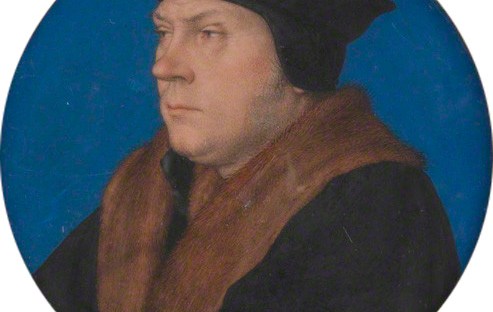
Hans Holbein the Younger and Thomas Cromwell as depicted in Hilary Mantel’s Wolf Hall trilogy

The content discusses the significance of historical fiction, particularly the works of Hilary Mantel, in portraying the Henrician court through researched narratives. It emphasizes Hans Holbein's portraits as vital historical sources, revealing connections between subjects like Sir Thomas Cromwell and prominent figures, thereby influencing modern interpretations of Tudor history.

Artists of Northern Europe, poetry and portraiture, Royal Portraits, Tudor portraiture

The Devonshire Manuscript & its place in history

Henry VIII’s court, particularly through the lens of Anne Boleyn and the Devonshire Manuscript, reflects a fascinating interplay of power, poetry, and sedition. Compiled by Boleyn's courtiers in the 1520s, the manuscript’s ambiguous verses provide insights into the dynamics of court life, ambition, and the eventual downfalls of key figures associated with Anne.

Artists of Northern Europe, Conferences and Symposia, Flemish primitives, Great Mistresses, Illuminated manuscripts, Illumination of legal documents, portrait miniature, Portraiture, Royal Portraits, Simon Bening, Tudor portraiture

Levina Teerlinc (?) Henry VIII’s court artist from 1546 – 1576

The author recounts their discovery of Levina Teerlinc, a significant 16th-century woman artist, while researching for their MA. They analyze a portrait by Nicholas Hilliard, suggesting it depicts Teerlinc as the Unknown Lady. Teerlinc's status as Elizabeth I's official painter raises her profile in the male-dominated art world of the period.

Artists of Northern Europe, Christmas, Flemish primitives, Illuminated manuscripts, Renaissance, Simon Bening, Subjects for discussion, Symbols and emblems

The Adoration of the Kings

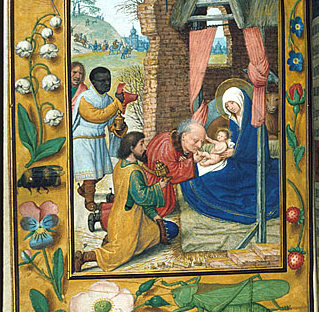
This post is a day late, but here are two beautiful full page miniatures by Simon Bening of his interpreation of the Adoration of the Kings on the Feast of the Epiphany. The first is from the da Costa Hours (MS M 399) now in the Morgan Library, New York. Adoration of the Kings. (folio… Continue reading The Adoration of the Kings