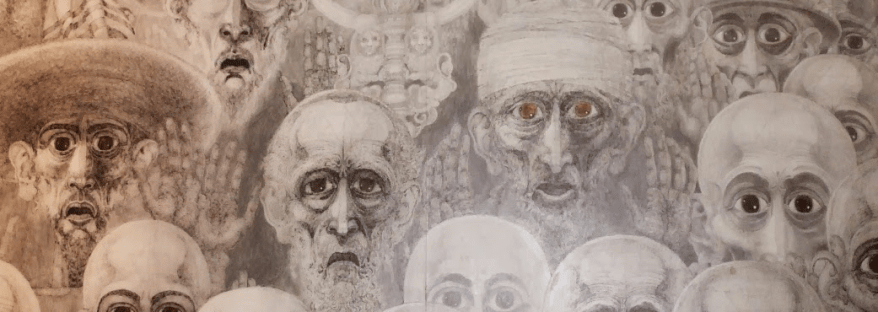
27th January we remember those who perished in the Nazi Holocaust. This is a short story dedicated to them.
Art historian with an interest in visual messages
27th January we remember those who perished in the Nazi Holocaust. This is a short story dedicated to them.

When Henry Tudor married Elizabeth of York in January 1486, it was not only the unifying of two warring noble house, but the birth of a new artistic age. Queen Elizabeth was the daughter Edward IV whose collection of books formed the first Royal Library now housed in the British Library. Edward was an avid… Continue reading The Plantagenet literary legacy and the early Tudor use of visual propaganda

How does a 21st century audience recognise the shakers and movers of Tudor society? Clearly those historians who immerse themselves in documents will have a feel for the way they believe these men and women thought. Combine that with the use of the portrait as a propoganda tool and suddenly these influential people are no… Continue reading How we know the Movers & Shakers of Tudor Society

The 15th century Flemish artists have long been referred to as 'primitive'. You might ask why this idea that artists who hail from north of the Alps comes from and just who they are. My concept of primitive does not match the level of sophisticted observation depicted on a flat surface seen in the works… Continue reading Is the work of 15th century Flemish artists ‘primitive’?

Tate Modern opened its doors on an exhibition of Amedeo Modigliani’s nudes on 23rd November, 2017. Seeing a Modigliani portrait at the age of 9 opened my eyes to think of portraiture as something other than photographic realism. The way this artist elongated the neck of the woman and the simple way the curves of… Continue reading Amedeo Modigliani at Tate Modern
 Melanie V Taylor