
In 2006 when I was studying for my MA in Medieval and Early Modern Studies, I heard a reference to a 16th century woman artist, Levina Teerlinc, on the radio and was inspired to research her life and works for my dissertation. During this research I came across a portrait of an Unknown Lady dated 1572 stating her age was fifty two years, and painted by Elizabeth’s I famous portrait painting ‘in little’, Nicholas Hilliard.
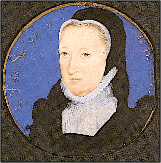
What struck me was the facial similarity between this woman, the self-portrait of Simon Bening of 1558 in the V&A in London, and a portrait of his father Alexander Bening, discovered in the Grimani Breviary by Eric Drigsdhal. [i]
With the necessary royal connections for Hilliard to take over as Elizabeth I’s artist of portrait miniatures when the aging Teerlinc died, what better way to demonstrate his ability by having him produce a portrait of his teacher. Thus the queen could judge Hilliard’s talent for herself by placing the portrait next to the face of the living artist.
In Erna Auerbach’s 1961 biography of Nicholas Hilliard, she suggested the Unknown Lady was a gentlewoman dressed in a black dress of Flemish fashion who was possibly in mourning.[ii]
Nicholas Hilliard was, like Hans Holbein the Younger some decades before him, famous for his ability to produce accurate facial representations. In his 1598 draft treatise, the Arte of Limning, Hilliard states :
“. . . now knowe that all Painting imitateth nature, or the life in euery things, it resembleth so far forth as the Painters memory or skill can serue him to express, in all or any maner of story worke, embleme, empresse, or other deuice whatsoeuer, but of all things the perfection is to imitate the face of man kind, or the hardest part of it, and which carieth most prayesse and comendations, and which indeed which one should not attempt vntil he weare metly good in story worke, so near and so weel after the life, as that not only the party in all liknes for fauor and complection is or may be very well resembled but euen his best graces and countenance notabelly expressed, for there is no person but hath variety of looks, and countenance, as well ilbecoming as pleasing or delighting, leauing the better handling somewhat in briffe tuching this point, leauing the better handling therof to better wits, wherein the best shall find infinite right pleasant (f4r) to discourse vppon and herof it cometh men commonly say of some drawer, he maketh very like, but better yet for them then the party is in deed, and of some other they also say he maketh very faier, but worse fauered in the comlynes and beauty of the face, therefor which giueth us such pleasinge, and feedeth soe wonderful ower affection, mor then all the world’s treasure . . .”[iii]
Hilliard goes on to describe that in order to capture the spirit of his sitters he works directly on to the prepared vellum without making any preparatory sketches. This bit of bragging is no doubt propaganda because some of Hilliard’s sitters have complicated poses that would require several preparatory sketches. The most famous are the Man Amongst Flames, and Man Amongst Roses and the Unknown Young Man holding a Hand from a Cloud, all of which are in the V&A. In this instance, Hilliard’s Unknown Lady sits in three quarter profile so perhaps she was ‘painted from life’ straight on to the vellum and because it was a face he knew well. She is clearly a lady of mature years, and her stated age of fifty-two gives us a date of birth of 1519/1520.
It has been suggested this Unknown Lady may be Katherine Bertie (née Willoughby), Dowager Duchess of Suffolk (1519 – 1580). Katherine was orphaned at the age of five or six and married first to Charles Brandon, Duke of Suffolk at the age of fourteen, then in 1552 to Richard Bertie. The Royal Collection Trust contains a sketch of the Duchess by Hans Holbein the Younger. (RCIN 912194) The date given to this sketch is between 1532 and 1543, these being the years of Holbein’s second period in England.
Her first husband, Charles Brandon, Duke of Suffolk, purchased the wardship of the six year old orphaned Katharine Willoughy from his brother-in-law, Henry VIII. This brought in an annual income of £900 per annum thus providing much needed money Brandon required to fund his position at court. First betrothed to Brandon’s son, Henry, by his first wife, Mary Tudor, Dowager Queen of France & Duchess of Suffolk, after Mary’s death Brandon chose to marry the fourteen year old heiress. The marriage produced two sons, Henry and Charles and Holbein painted miniatures of the two boys sometime between 1540 and 1542 when they were aged five and three. Each child has strawberry blonde hair and blue eyes.[iv]
There is a theory that when the eight year old Hilliard went into exile with the Bodley family, probably in the spring of 1555, he would have come into contact with Katharine Bertie and her family in the city of Wesel. There is further speculation that this might have been where he was shown the two Holbein miniature portraits of her sons who had died in 1551, and it was seeing these that inspired him to become a painter of limnings. That may be the case, but is it likely?
Preparing his treatise in 1598 Hilliard provides guidance for those considering a portrait miniature as follows:
“. . . I haue formerly sayd that the goodness or ilnes of the living face consisteth in three things
1. Completion }
2. Proportion } Being the favore
3. Coutenance }
So remember the goodness of a picture after the life, standeth chiefly also vppon three points
- Liffe } {Eye
- favor }weh chiefly consist in these three features {nose
- Liknes } {mouth.
And goes on to say “. . . that the Nosse giueth cheefe fauor, for one shall neuer see an Ill fauored face, that hath a weel proportioned nosse.”[v]
Using Hilliard’s guidance to compare the Unknown Lady with the Holbein sketch labelled Duchess of Suffolk it becomes obvious there is little similarity in the way the eyes are set, the depths of septum, the mouths, but more importantly (especially in Hilliard’s opinion), the shape of the woman’s nose.

As an additional element for eliminating the duchess as being Hilliard’s Unknown Lady, sitters of many of Holbein’s sketches of those at the English court were identified by Sir John Cheke. The majority of these sketches were owned by Henry VIII and the presence of Cheke’s attributions regarding the German maestro’s sitters suggests Holbein’s sketches were already in the royal collection during Cheke’s time as tutor to Prince Edward and his sister Princess Elizabeth. Since Cheke did not die until 1557, and Teerlinc was at court and solid in her career as the official royal illuminator, it is likely Cheke would have known her. Hilliard’s Unknown Lady bears little or no resemblance to either the Holbein sketch of Katherine Bertie, Dowager Duchess of Suffolk or the Grimsthorpe Castle miniature portrait. However, the person in the Holbein sketch and the Grimsthorpe miniature appear to be the same individual.
So who was Levina Teerlinc (née Bening) and why did Henry VIII take the radical step of appointing a woman to the official post of king’s paintrix of the English court making Teerlinc the first woman in europe to be appointed to an official position as an artist.
Teerlinc arrived in England in 1546 as the replacement limner for Lucas Horenbout who had died in March 1544. She was the last of three generations of artists of the Bening family, the leading family of illuminators in all of Europe. From the little knowledge available of her life we know she was the oldest of five daughters. Her grandfather, Alexander Bening, was one of the leading illuminators of the late fifteenth century and her grandmother was the sister of the artist Hugo van der Goes, who had stood surety for Alexander’s payment for the “freedom of the corporation of painters and illuminators of Ghent in January 1469”.[vi]
James Weale’s research in the Bruges Town archives at the beginning of the 20th century found a reference to Levina Bening’s marriage to one George Teerlinc of Blankenberghe in 1545.[vii] Simone Bergman writing in 1934 states the entry of 4th February 1545 was the Teerlincs being summoned to close the accounts for the estate of Teerlinc’s father who had died in the January.[viii] If this is the one and the same reference then it is probable George and Levina were already married by the February of 1545.
In their article, “Susanna Horenbout, Levina Teerlinc and The Mask of Royalty”, Susan James and Jamie Franco propose that the Teerlincs arrived in England immediately after finalising George’s late father’s estate and that Queen Katharine Parr’s sister, Anne Herbert, secured the generous annuity of 40l per annum after Levina became a member of the queen’s household.[ix] What has not been recorded, or if it were has not yet been found, is whether Levina was invited because her talent was known, or whether Henry VIII was hoping to persuade her father, Simon Bening, to leave his life in Flanders and remove to England. It is possible Bening, who had a thriving business in Bruges creating illuminated manuscripts for the emperor, kings, dukes, princes of the church and the very wealthy, suggested his daughter as a suitable replacement as the official illuminator of the Tudor court.
Teerlinc’s name first appears in Henry VIII’s accounts in 1546 and she went on to serve Edward VI (except for a period of approximately 18 months), Mary I and finally Elizabeth I, at the “kings’ and queens’ pleasure” at a remuneration of 40 livres (40l) per annum .[x] In late 1559 Queen Elizabeth changed the terms of Teerlinc’s remuneration and awarded her a lifetime annuity of 40l per annum, to be paid quarterly. The Easter Accounts for that year also reveal that Teerlinc received a lump sum of 150l. In these accounts Teerlinc’s name appears within a few lines of that of goldsmith, Robert Brandon, who was paid a very much larger sum of 1500l and to whom Hilliard would be apprenticed in 1562.[xi] Under the terms of the will of Mary I, Queen Elizabeth was instructed to pay all the late queen’s outstanding debts. The sum of 150l equates to the amounts not paid under the terms of Teerlinc’s original annuity for the whole period of Mary’s reign – the lack of regular payments are conspicuous by their absence in any of the royal accounts after the death of Edward VI. In today’s money this sum would have a labour value of £839,800.[xii]
That the names of Brandon and Teerlinc appear close together in the same accounts leads us to consider that they were known to each other through their individual services to the late queen. Miniature portraits were often, but not always, contained in lockets, which could be either bought ‘off the peg’, in which case the artist painted a portrait to fit the case, or were made to order – but either way, both types of locket would have been made by a goldsmith which leads us to speculate that Teerlinc’s portraits may have ended up in lockets made in the Brandon workshop. In this instance, Hilliard’s Lady has been clipped to fit some form of locket.
In other instances these tiny portraits were wrapped in ‘tissue’ as in the case of the portrait of Robert Dudley that Elizabeth I kept in a locked cabinet in her private apartments. In 1564 the queen showed it to Sir James Melville ambassador to Mary Queen of Scots. A portrait of Dudley in the Buccleuch collection was painted in the mid 1560s, and since we know he commissioned many portraits and had access to the official paintrix to the queen, this one had to have been by Teerlinc both stylistically, and because Hilliard was too young and apprenticed to Robert Brandon learning the art of goldsmithing. While it may be a romantic notion, this portrait is possibly the one the queen showed to Melville.[xiii]
The sixteenth century critic, Ludovico Guicciardini, comments on Teerlinc’s abilities as follows:
“Et di donne vive nomine remo quattro, la prima e Levina, figlia uola di maestro Simone de Bruggia, gia metionato, la quale nel miniare come il padre e tanto felice et eccellente, che il prefato Henrico Re d’Inghilterra la volle con ogni premio hauer a ogni modo all sua Corte, oue su poi maritata nobilmente, su molto amata dalla Regina Maria, e hor e amatissima dalla Regina Elizabetta.”[xiv]
That translates as:
“as for the women and girls who are still living in this art I will name you four: the first is Levina, the daughter of Simon of Bruges, who is so excellent at wielding the vermillion as her father than Henry VIII, the King of England, wished to have her in his own country, no matter the cost, where she was married and well beloved by Queen Mary and at present is much beloved by Queen Elizabeth.”
Thus we see that during her own lifetime critics were highlighting Teerlinc’s talents as being as good an artist as her father, Simon Bening, the premier illuminator of all Europe, who was commissioned by the emperor, kings, dukes, archbishops and the very wealthy to paint illuminations in books of hours, of genealogies, breviaries and other manuscripts.
The exact date of Teerlinc’s birth is unknown, but she is known to have been in her fifties in the 1570s, therefore approaching what was then considered old age. By 1572 (the date of our Unknown Lady) Teerlinc had been in service as the court’s official limner for some twenty six years, serving Henry VIII, Edward VI, Mary I and Elizabeth I.
What other evidence is there to support my theory Hilliard’s Unknown Lady is Levina Teerlinc?
If we examine a self-portrait of Simon Bening aged seventy-five painted in 1558 and now in the Victoria & Albert Museum, London, we see the artist at work. He has placed himself next to a mullioned window, allowing natural light to fall over his left shoulder while he worked.[xv]

Bening is wearing his ‘working clothes’, which consists of a close fitting black cap with a matching over garment. In his draft treatise Hilliard states that the limner must wear clothes of silk that will not shed lint and the artist must not allow anything to fall on to the work as it will spoil the finished article.[xvi] Therefore, do we conclude that Bening is wearing a cap not just for warmth, bearing in mind he is seventy five years of age, and that it is to stop any dandruff or hair falling onto his work Perhaps the cap performs the dual role of both warmth and containment.
Like Simon Bening our lady also has the majority of her hair covered, as would also befit a married woman. As well as being the type of headwear an elderly married woman would wear, it would also stop any dandruff or loose hair falling on any watercolour she was working on, such as an illuminated page, or individual portrait. Auerbach has noted that this sitter is wearing clothes that are Flemish in style.[xvii] The use of black fabric and the style befits a lady of her years. In addition we should also note that black and white were the colours of the Queen Elizabeth I’s livery.
In his draft Treatise of 1598 Hilliard is keen to highlight Holbein’s influence on his own work, but the German maestro had died in 1543, some four years before Hilliard was born. This statement has puzzled art historians for decades. If this is a portrait of Teerlinc then it establishes a definite link between her and Elizabeth I’s favourite artist ‘in little’.
At the age of eight Hilliard had gone into exile with the Bodley family. This expanded his horizons, but the possibility of a chance sighting of two Holbein portraits of the late children of the Dowager Duchess of Suffolk given to an eight year old suggests this concept is a romantic ‘maybe’. Furthermore in Sir Thomas Bodley’s autobiography Bodley states that his father, John, went into exile first, and the family followed on, meeting up with John Bodley in Wesel. Bodley states the family ‘made no long tarriance in either of these two Townes for that my father had resolved to fixe his abode in the City of Geneva, where, as farre as I remember, the English Church consisted of some 100 persons.’[xxi]
When the Bodley family returned to England in 1559 they remained in London and there is no evidence showing Hilliard returned to his family in Exeter. We know he took up an apprenticeship with the queen’s goldsmith, Robert Brandon three years later in 1562. Having been part of John Bodley’s family it seems more probable he remained with John Bodley in London where under his supervision the young Nicholas could gain an apprenticeship to a goldsmith in the capital city. Unfortunately in the absence of any documentary evidence regarding the whereabouts of the now twelve year old Hilliard in 1559, whether or not he returned to Exeter remains speculation. The only recorded information we have is when he joined Brandon’s workshop in 1562 at the age of fifteen where he remained until 1569 when he became a freeman of the Company of Goldsmiths and set up his own practice at the age of twenty two.
One of the requirements of a goldsmith are that they can execute an accurate design and use watercolour wash to highlight elements of their designs, which would require someone to train him in the mixing of pigments. It is only a small step to see how this part of Hilliard’s training could include portraiture and Teerlinc fits that category.
As for the idea that Holbein was Hilliard’s inspiration, it is possible that as the young boy’s interest in portraiture was sparked when he was taken to the palace of Whitehall and shown other works by Holbein. For instance, the great mural of Henry VIII, Henry VII, Elizabeth of York and Jane Seymour in the private royal apartments in Whitehall, as well as the various portraits of the king, Jane Seymour and possibly even that of Anna, Duchess of Cleves – all by Holbein, and these portraits would have still been in the royal collection.
In an age where women were no more than chattels of their husband,[xxii] when writing his treatise in 1598 Hilliard would have seen it more beneficial to his reputation to state his inspiration was the work of the great Hans Holbein rather than a woman artist since Holbein had an international reputation and by 1598 Teerlinc had disappeared almost without trace.
Using Hilliard’s method for analysing faces we should now compare the two Bening artists with Hilliard’s Unknown Lady.
From the two accepted portraits of Simon Bening we see that in the 1558 portrait his features have not changed dramatically from the earlier one in the Grimani breviary, therefore we can accept Simon’s self-portrait is an accurate likeness. From the way the young Bening looks out of the Grimani illumination suggests this may be an early self-portrait. [xxiii]
His eyes are still the same, the shape of his nose echoes that of his father, the aged Alexander Bening who stands next to him, as does the shape of the face. In Simon’s later portrait the passage of time is expressed in the wrinkles and slackness of skin at his throat, as it was in the portrait of his father, Alexander. We also learn that by 1558 the seventy five year old Bening needs glasses.
When the portraits of Bening pere et fils are placed together with Hilliard’s unknown Lady the family similarity becomes apparent. The nose of our Unknown Lady is almost identical to that of both men, fulfilling Hilliard’s own requirement that the nose bears the ‘most favour’. Even in the 16th century it was noted that families had features that were handed down through the generations. One only has to look at portraits of Emperor Charles V and compare them with his son Philip II to note the famous Hapsburg jaw.

Lastly, we have to consider why Hilliard painted Teerlinc in 1572.
It is unlikely Teerlinc would have commissioned this portrait since she was just as capable of painting her self-portrait as her father. Is it coincidental that it was painted in the year Hilliard is thought to have first painted Elizabeth I, and if so, was there a purpose to it?
In 1572 Teerlinc was in her fifties, and since the queen was notoriously vain and did not like any visual reminder to the passage of the years, as the painter responsible for illuminating anything the queen should require should Teerlinc die, having her portrait painted would have been an ideal way of introducing her successor without actually any reference to age. Therefore, in order to demonstrate Hilliard’s talents as a portrait painter of superior talent, a portrait miniature of the queen’s official limner who had trained him in that art, would be the perfect tool. Teerlinc would have been able to present this Hilliard’s portrait for the queen’s scrutiny who could then compare the painted likeness with that of her ‘most loved’paintrix[xxiv]. What better way to demonstrate the accuracy with which the young Hilliard was able to portray his sitters, as well as being a subtle way of introducing the aging Teerlinc’s prospective successor to Elizabeth I.
Teerlinc died in the summer of 1576 at the age of fifty-six, by which time Hilliard had painted the queen several times, including two table (large) portraits,[xxv] and went on to become the queen’s favourite painter ‘in little’.
The family resemblance between the portraits of Simon and Alexander Bening to Hilliard’s Unknown Lady was accepted by both my MA dissertation supervisor, Professor Alixe Bovey,[xxvi] and my external examiners.
Taking all this into consideration, we now we have a date for Teerlinc’s birth being 1520, and solid evidence of the link between Nicholas Hilliard and Levina Teerlinc (née Bening) (1519/20-1576), the first woman appointed as an official court artist to any European court.
Endnotes
[i] Drigsdhal, Eric: CHD Miscellanea 2002. Alexander Bening & the Grimani Breviary (Ghent 1515); Summary of a paper ‘Manuscripts in Transition’ presented at the Royal Library of Belgium, Brussels 5-9th November 2002.
[ii] Erna Auerbach; Nicholas Hilliard (London 1961) p62.
[iii] Hilliard The Arte of Limning p54 (transcription of original text eds Thornton & Cain) )
[iv] Royal Collection Trust : Henry Brandon ætitis sui 5, RCIN 422294 & Charles ætitis sui 3, RCIN 422295, these two children died within hours of each other in 1551 of the sweating sickness making these portraits treasured momento mori.
[v] Hilliard, The Arte of Limning; p58.
[vi] Weale, James W. H., Simon Binnink, Miniaturist, The Burlington Magazine for Connoisseurs, Vol 8 No 35 (Feb 1906) pp355-357.
[vii] Weale, James; “Livina Teerlinc, Miniaturist”; The Burlington Magazine for Connoisseurs Vo. 9 No 40 (Jul 1906). p278. Weale cites the reference he found in Bruges as Registre du Greffe 1544 – 45, f85v. .
[viii] Bergmans, Simone; “The Miniatures of Levina Teerling”; The Burlington Magazine for Connoisseurs, Vol 64, No 374 (May 1934) pp232-233, 235-236.
[ix] James, Susan & Jamie Franco; Susanna Horenbout, Levina Teerlinc and The Mask of Royalty”; Jaarboek-Koninklijk Museum Voor Schone; 2000. pp90-125
[x] C66/940 Letters Patent (1559). 40l to be paid quarterly from “The Feast of the Annunciation of the Blessed Virgin Mary in the thirty-eighth regnal year of Henry VIII” which suggests the date of March 1546 for Levina Teerlinc first being retained by Henry VIII.
[xi] TNA E405/124.
[xii] www.measuringworth.com (9 Mar. 2022) The direct RPI equivalent of 150livres would be £58,170.00, but this website also has value comparisons for labour, economic share, income value and project value, which vary between the RPI of £58,170.00, a labour value of £839,800.00 and the economic cost of a project as £27,890,000.00.
[xiii] Memoirs of Sir James Melville of Halhill pp44-47. For the possible portrait of Dudley, see Auerbach, Nicholas Hilliard; p55.
[xiv] http://amshistorica.unibo.it/archivio/000185/000001.jpg p100.
[xv] Hilliard, Arte of Limning: p53: Hilliard describes the place of work needed to face north, or northeast and not near trees or reflections of walls.
[xvi] Hilliard. The Art of Limning, 1598 p53
[xvii] Auerbach; Nicholas Hilliard; pp62-63
[xviii] CHD Miscellanea 2002. Alexander Bening & the Grimani Breviary (Ghent 1515). An Introduction by Eric Drigsdahl.
[xix] CHD Miscellanea 2002. Alexander Bening & the Grimani Breviary(Ghent 1515). E. Drigsdahl; Summary of a paper ‘Manuscripts in Transition’ presented at the Royal Library of Belgium, Brussels 5-9th November 2002.
[xx] E. Goldring; Nicholas Hilliard: Life of an Artist; New Haven & London 2019. pp 45-51.
[xxi] T. Bodley; The Autobiography of Sir Thomas Bodley; with an Introduction and Notes by William Clennell; Bodleian Library; Oxford. 2006. p38.
[xxii] This did not change until 1st January 1974 with the implementation of the Matrimonial Causes Act when women were deemed to be no longer chattels.
[xxiii] In which case it is possible he was the author of the full page illumination of the arrival of the Queen of Sheba at the court of King Solomon.
[xxiv] Guicciardini p100.
[xxv] The Phoenix and Pelican portraits both oil on panel and attributed to Hilliard.
Selected bibliography
Primary sources
TNA, Kew
C66/ Letters Patent
E101 Exchequer Accounts
E315 The Court of Augmentations: Treasurer’s Accounts 1536 – 1834..
E403 Exchequer of Receipt
E405 Tellers Rolls
Printed sources
Anonymous; 1573 Treatise on Limning.
Bodley, Sir Thomas; The Autobiography of Sir Thomas Bodley, with an introduction and notes by William Clennell; Bodleian Library, University of Oxford, UK. 2006.
Guicciardini, Ludovico; Descrittione di M. Lodouico Guicciardini patritio fiorenti, di tutti I Paesi Bassi; © University of Bologna; 1567.
Hilliard, Nicholas; The Arte of Limning; 1598: R.K.R. Thornton & T.G.S. Cain (eds); Carcanet Press; 1992.
Secondary sources:
Auerbach, Erna; Tudor Artists; Athlone Press, London. 1954.
Auerbach, Erna; Nicholas Hilliard; Routledge & Kegan Paul, London. 1961
Bergmans, Simone; “The Miniatures of Levina Teerling”; The Burlington Magazine for Connoisseurs, Vol 64, No 374; May 1934.
Coombs, Katherine; The Portrait Miniature in England; V&A, London. 1998 reprinted 2005.
Drigsdhal, Eric: CHD Miscellanea 2002. Alexander Bening & the Grimani Breviary (Ghent 1515); Summary of a paper ‘Manuscripts in Transition’ presented at the Royal Library of Belgium, Brussels 5-9th November 2002.
Edmund, Mary; Hilliard & Oliver; Robert Hale, London; 1983.
Foister, S; Holbein in England; Tate Publishing; London 2006.
Fumerton, Patricia; Cultural Aesthetics: Renaissance Literature and the Practice of Social Ornament; University of Chicago Press, Chicago & London; 1991.
Goldring, Elizabeth; Nicholas Hilliard; Life of an Artist; published for the Paul Mellon Centre for Studies in British Art; Yales University Press; New Haven & London. 2019.
Goldring, Elizabeth; Robert Dudley, Earl of Leicester, and the World of Elizabethan Art: Painting and Patronage at the Court of Elizabeth I; Yale University Press; 2014.
James, Susan E. & Jamie Franco; Susanna Horenbout, Levina Teerlinc and The Mask of Royalty”; Jaarboek-Koninklijk Museum Voor Schone; 2000.
James, Susan E. The Feminine Dynamic in English Art 1485 – 1603: Women as Consumers, Patrons and Painters; Ashgate; 2009.
Hearn, Karen; Nicholas Hilliard; Unicorn Press; London; 2005.
Macleod, Catharine; Elizabethan Treasures: Miniatures by Hilliard and Oliver; National Portrait Gallery, London; 2019.
Moyle, Franny; The King’s Painter: the Life and Times of Hans Holbein; Head of Zeus; London 2021.
Murrell, Jim; The Way Howe to Lymne: Tudor Miniatures Observed; Victoria & Albert Museum, London 1983.
Reynolds, Graham; English Portrait Miniatures Revised Edition; Cambridge University Press; 1988 edition.
Strong, Roy; Gloriana: The Portraits of Queen Elizabeth; Pimlico edition; London. 2003.
Strong, Roy; The Cult of Elizabeth; Random House. London 1999.
Strong, Roy; The English Icon: English & Jacobean Portraiture; Paul Mellon Foundation for British Art in association with Routledge & Kegan Paul Ltd, London. 1969.
Strong, Roy; The English Renaissance Miniature (revised edition); Thames & Hudson 1983 & 1984.
Strong, Roy; Artists of the Tudor Court: The Portrait Miniature rediscovered 1520-1620; The Victorian & Albert Museum, London, 1983.
Taylor (previously Fraser), Melanie; unpublished MA dissertation on Levina Teerlinc: Elusive Limner to the Tudor Court; in fulfilment of a Master of Arts degree in medieval and early modern studies undertaken at the University of Kent, UK. 2006.
Weale, James W. H., Simon Binnink, Miniaturist, The Burlington Magazine for Connoisseurs, Vol 8 No 35; Feb 1906.
Weale; “Livina Teerlinc, Miniaturist”; The Burlington Magazine for Connoisseurs Vol. 9 No 40; Jul 1906.
Wilson, Derek; Hans Holbein: Portrait of an Unknown Man; W & N; 1996.

 Melanie V Taylor


I wrote my MA Thesis on this artist in 2005 defense. A Crisis in Regal Identity: The Dichotomy Between Levinia Teerlinc’s (1520-1576) Private and Public Images of Queen Elizabeth I (1533-1603)
LikeLike
Hi Kimberley, I would love to read this. Have you published this anywhere?
I have continued my research into Teerlinc for the past 17 years, p lease email me melanie.v.taylor@gmail.com so we can continue our discussion.
Very best wishes,
LikeLike