
Hidden away in the Morgan Library in New York is this gem of a book of hours painted by the last of the male Flemish illuminators, the great Simon Bening.
Folio 151verso is a full page illumination of the birth of the Christ Child.
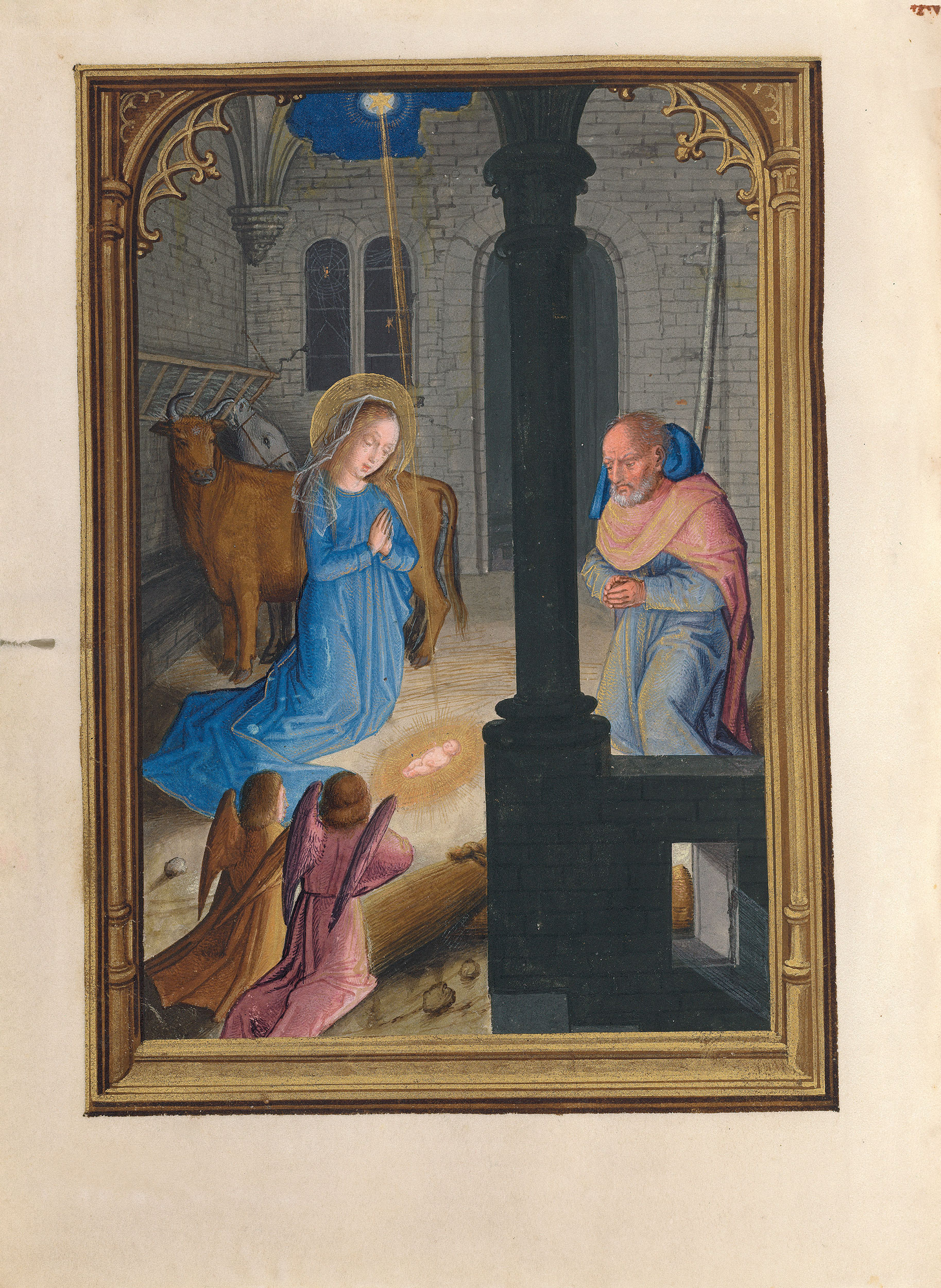
The Virgin kneels before naked newborn Christ, who is laid on a bed of straw. The Virgin is veiled and nimbed and behind Mary the ox and the ass turn their heads in acknowledgement of the arrival of the newborn Saviour. The Virgin’s husband, the carpenter Joseph, also kneels in adoration of the Christ Child, and two kneeling angels are heavenly witnesses to the birth.
What sets this rendition of the Nativity apart from many others is that Bening has chosen to portray Christ’s entry into the world as a night scene. The ruined building is lit by the divine light coming from the naked Holy Infant, and the starlight that shines through the hole in the roof. The ox and the ass are of God’s creation and did not commit the sin of eating of the forbidden fruit in the Garden of Eden so are permitted to be within the sacred space with the Christ Child, the Virgin and the two angels.
By opening this page we too have been granted a very private moment to become one with those within the ruined stable, but like Joseph we are separated from the infant Christ, the Holy Mother and the two heavenly visitors by Bening’s inclusion of the upright dark pillar. Joseph holds a separate space near his wife, but he too is separated from us by the low horizontal bar.
However, the wooden frame surrounding this scene means it is as if we are looking through a window. This final visual device separating us from the stable scene means there are three elements to consider and for those who have studied the Christian Kaballah will recognise three as being a holy number representing the Trinity.
This book of hours was originally created for the de Sa family in circa 1515, and you can see their coat of arms through folio 1 recto, which lies under those of the Da Costa family (folio 1 verso).
This illuminated manuscript, unlike many others, is intact and the Morgan library has digitised every page. If you wish to examine more of Bening’s beautiful and evocative illuminations as well as all the pages containing prayers, here is the link to the thumbnails Ms M 399 . Just click on the image that appeals to you and you can enlarge it and enjoy Bening’s exquisite mastery of detail, portrayal of landscape and creation of atmosphere.
Seasons Greetings to you all, and may 2023 bring you joy and happiness.

 Melanie V Taylor